


The FLOYD wheel
In 1970, an engineering student named Frank Nasworthy was killing time at a plastics factory in Virginia that made polyurethane wheels for roller skates. Some batches came out too soft and piled up in a bin nobody wanted. Nasworthy bolted a handful of the rejects to a skateboard and rode it down his driveway. It held the pavement in a way nothing he'd ridden before had.
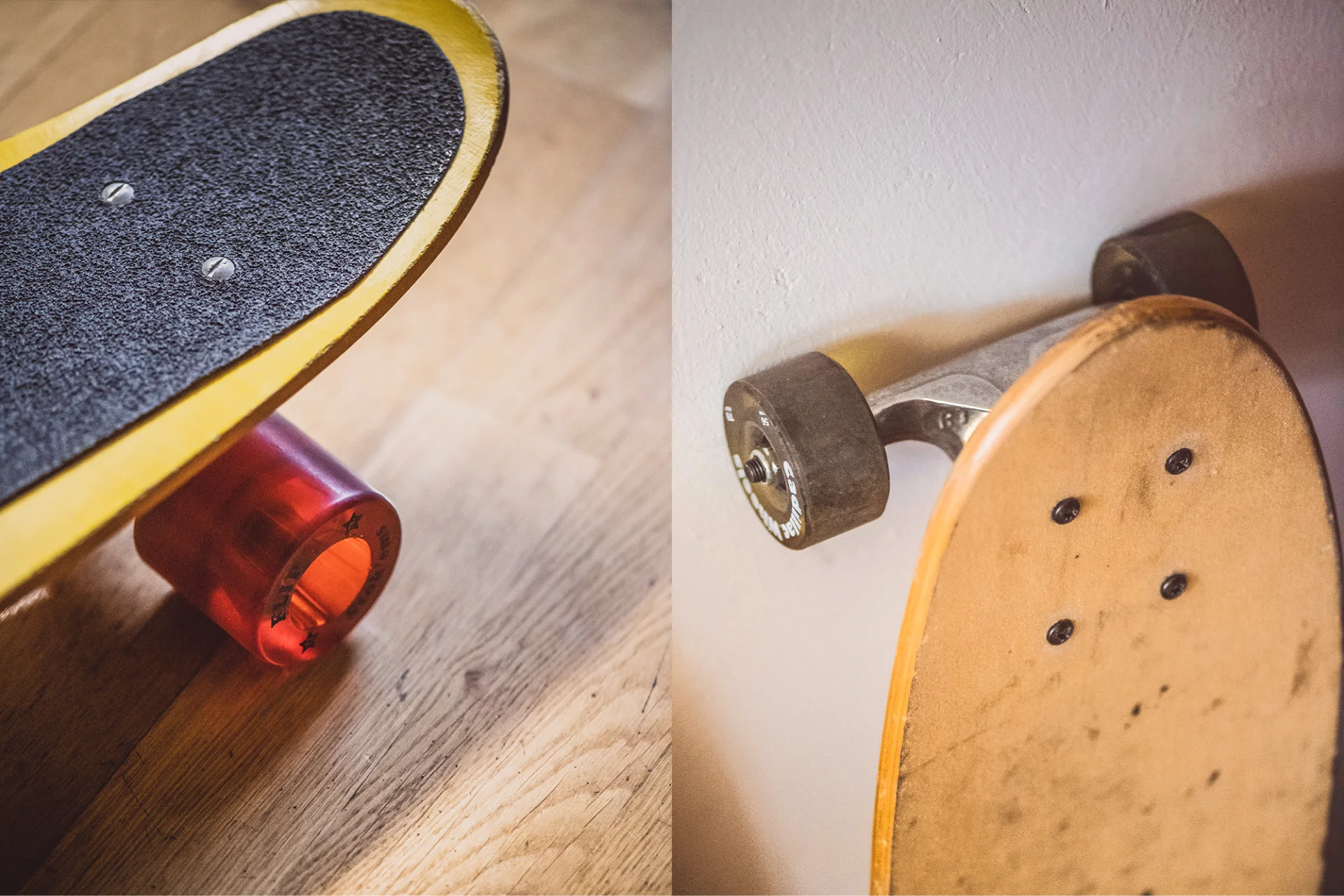
He moved to Encinitas, California, and waited tables until he'd saved seven hundred dollars. That was enough to finish a wheel design of his own and place an order with the plastics shop back in Virginia. In April 1973 the shipment landed: a thousand polyurethane wheels. He called them Cadillac Wheels, loaded the boxes into his trunk, and drove up and down the coast walking into surf shops to sell them himself. People started calling him Captain Cadillac.
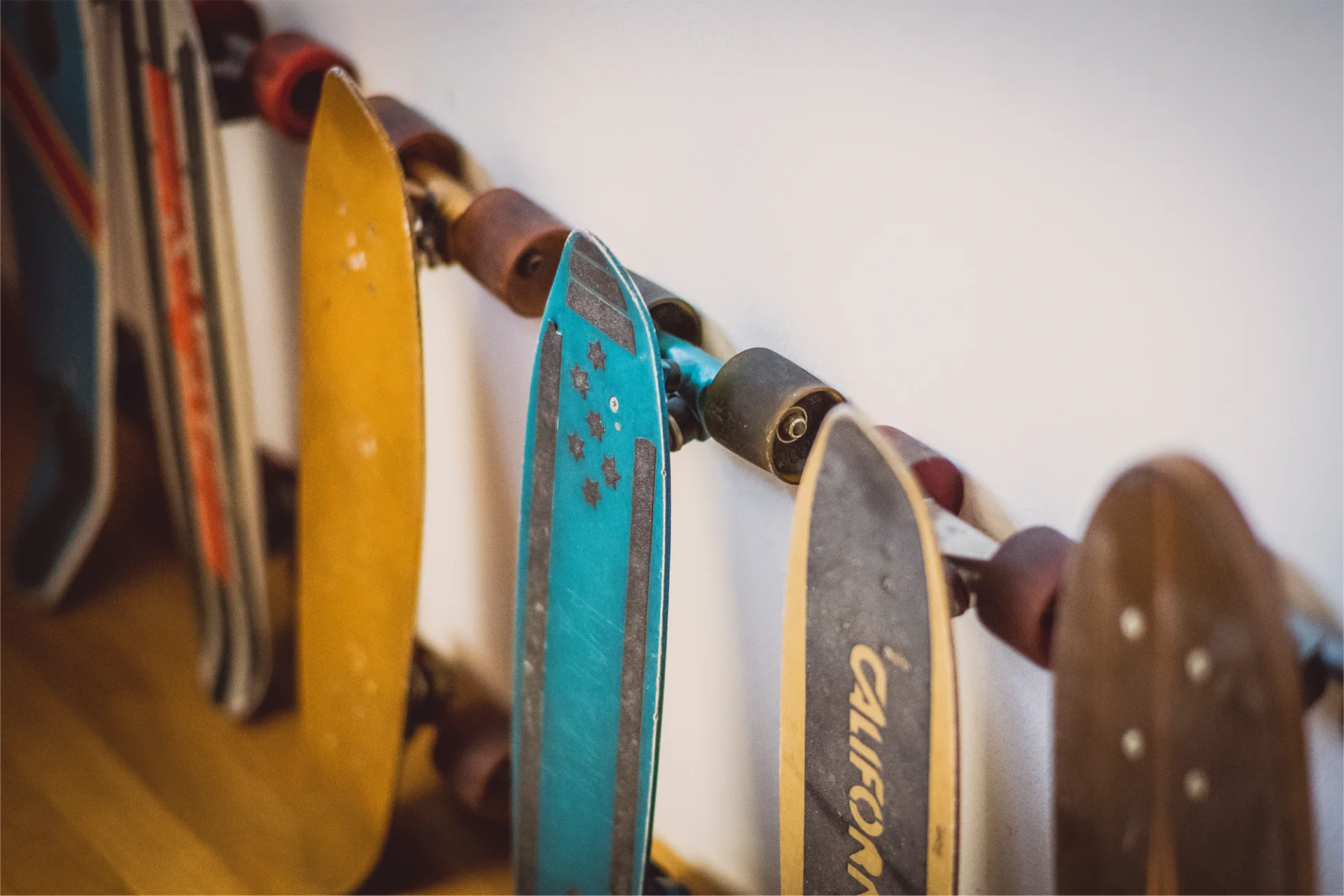
One of those shops was Zephyr, in Santa Monica, which sponsored a team of teenagers from a rough stretch of coastline the locals called Dogtown. They'd learned to surf a wave clogged with pilings and rebar, staying low and quick because there wasn't room to do anything else, and once they had wheels that could grip concrete, they skated the same way. At the 1975 Bahne-Cadillac National Championships, named after the wheel itself, skateboarding was still mostly handstands and spins. The Zephyr team showed up crouched low and carved hard through the turns instead. Nobody scoring the contest had a box to check for what they were watching. Two years later, one of them, Tony Alva, rode up the wall of a drained pool, flew off the coping, and dropped back in facing forward. The trick hadn't been possible before Cadillac wheels.
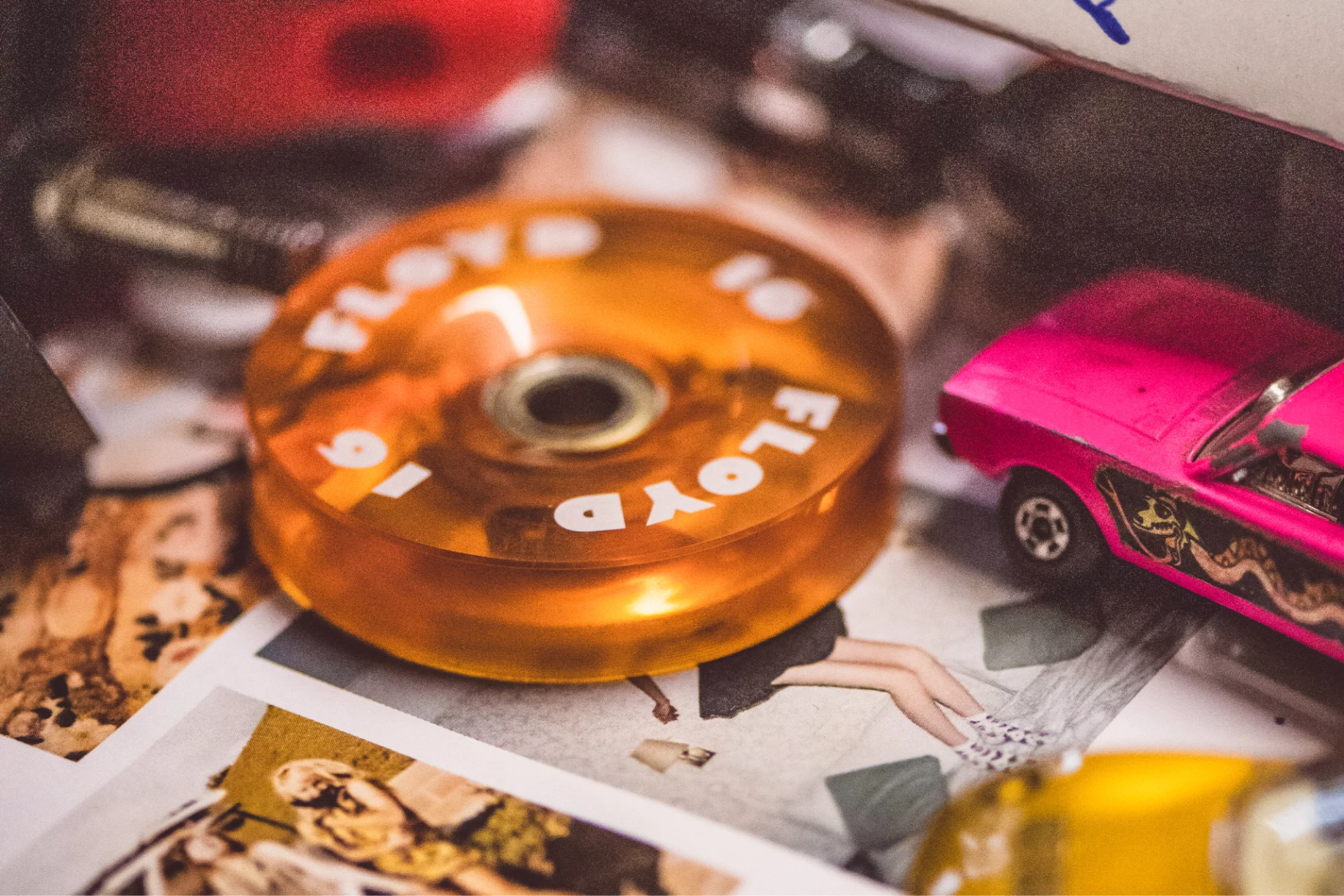
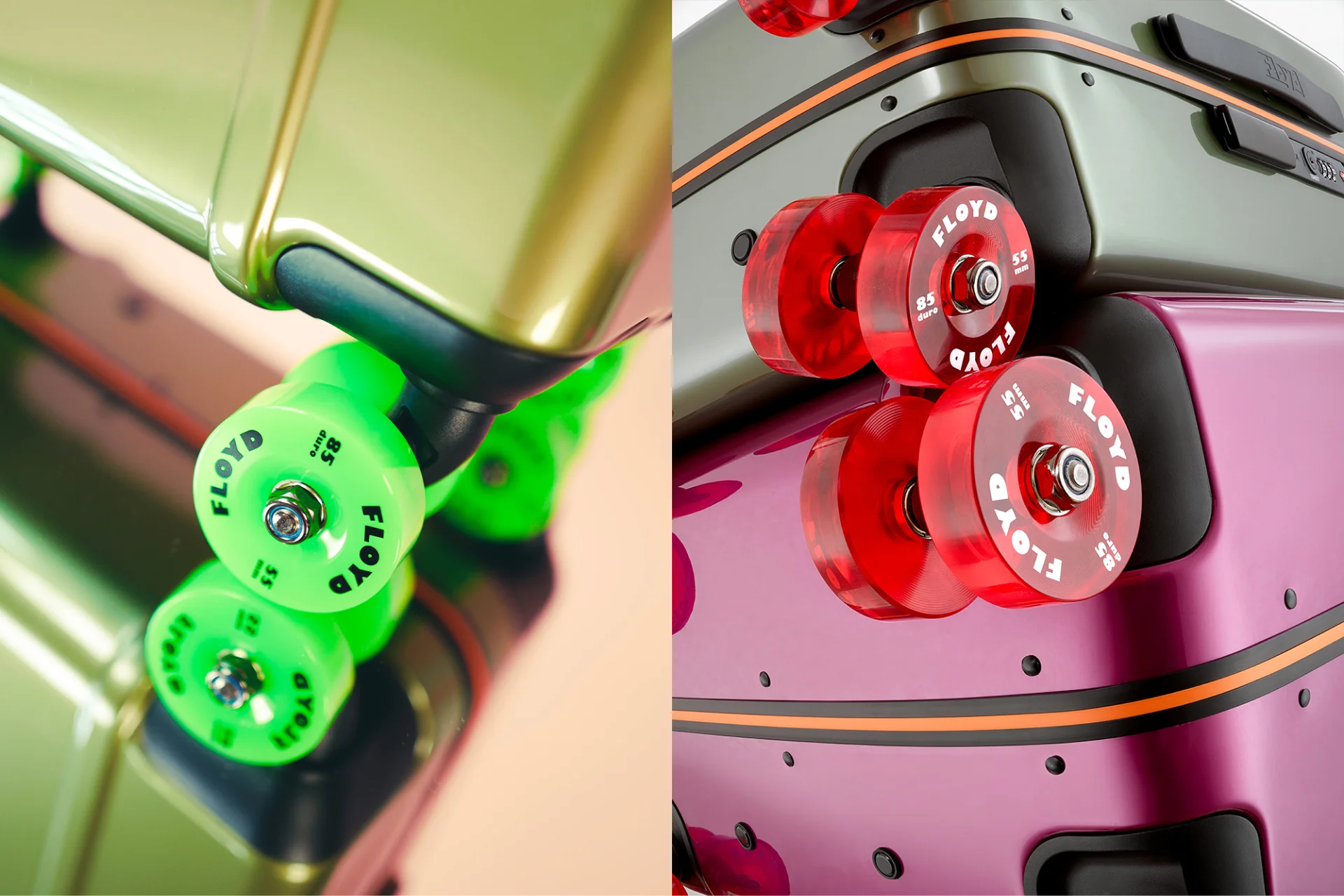
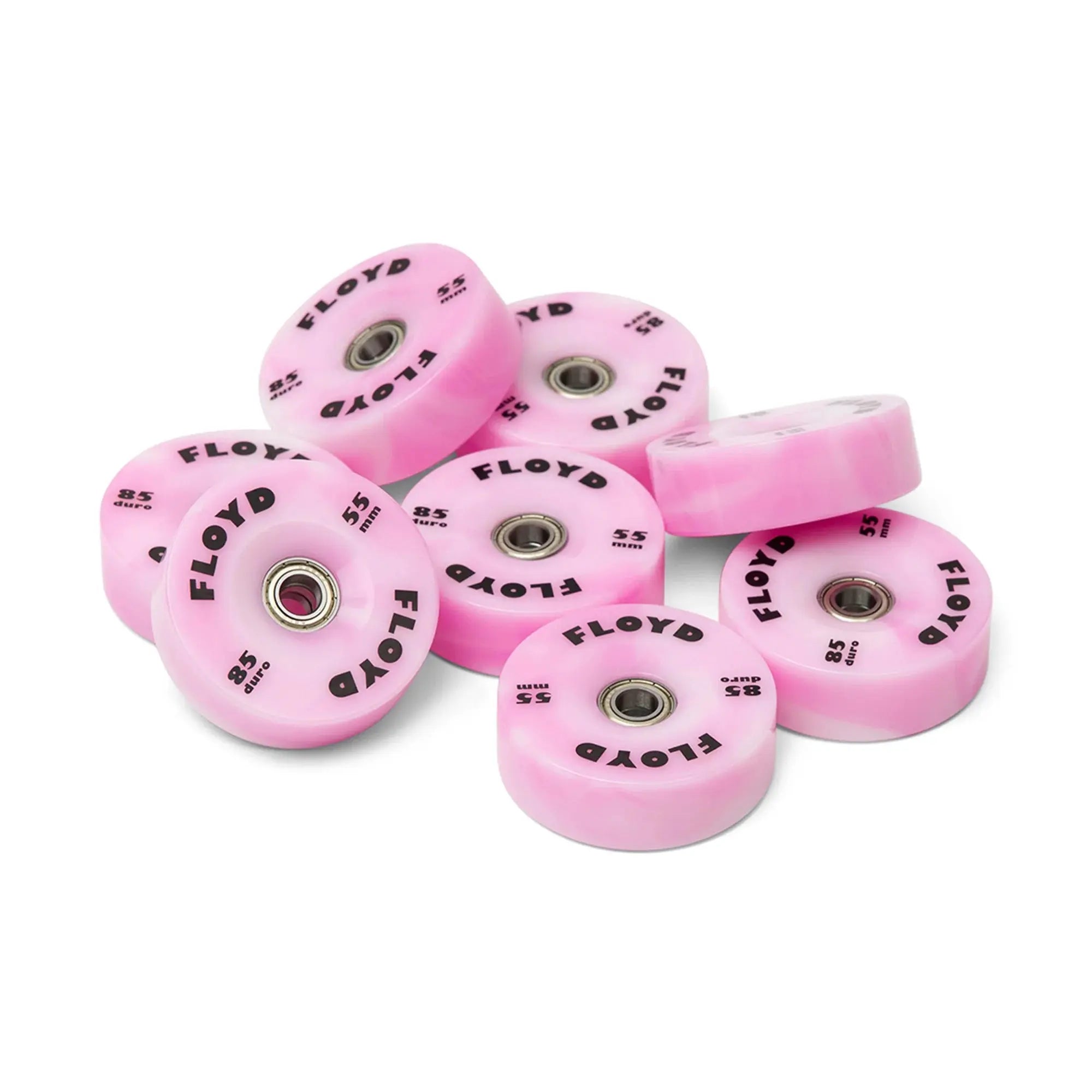
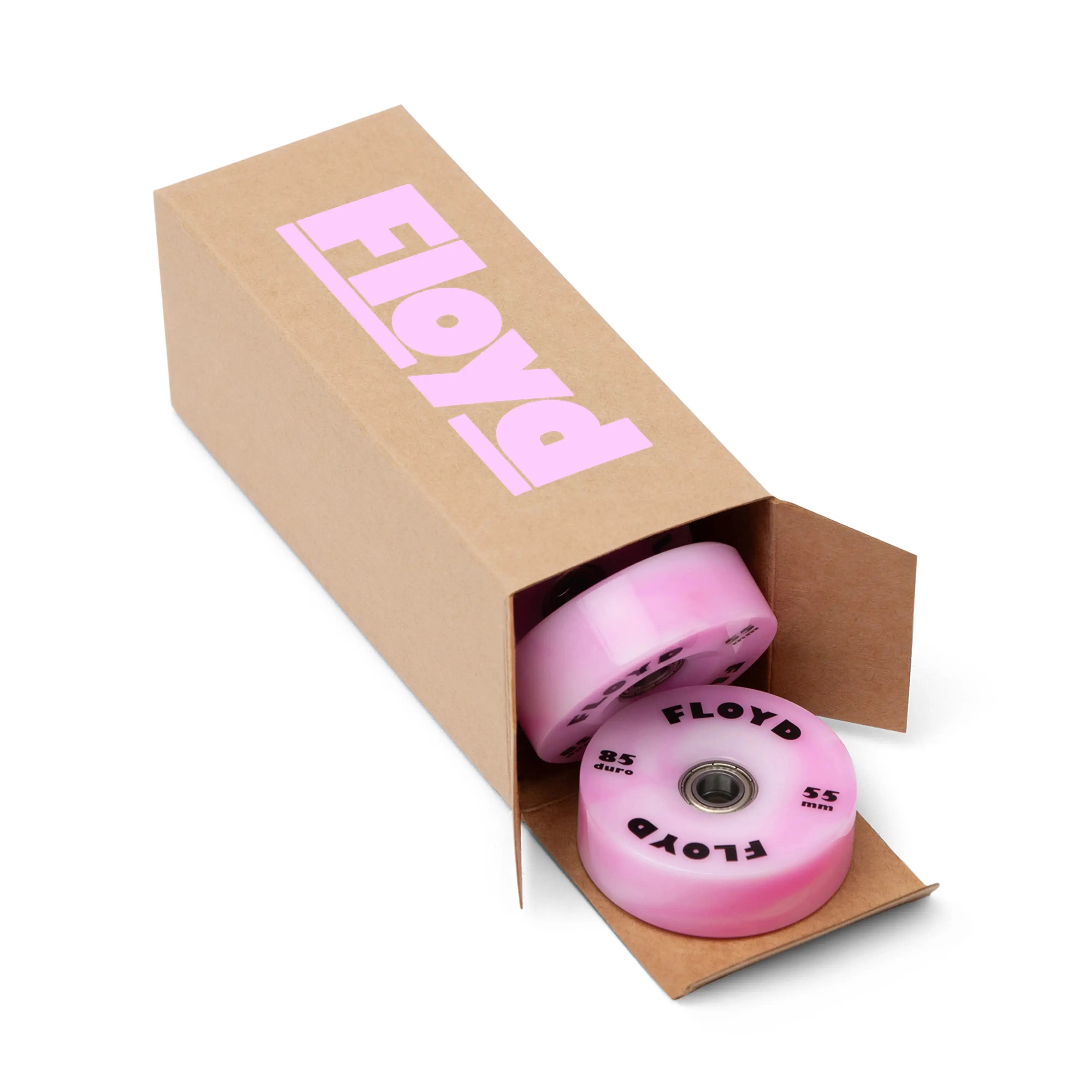
That same wheel is what Floyd bolts to its cases. Eight per case, 55mm, 85 Duro Polyurethane, not the hard little casters most luggage still drags around on. Each wheel spins on two ball bearings, which is what keeps the case gliding smoothly in any direction instead of wobbling the way most luggage wheels do.
The wheels come in fourteen colors, and each case ships with a small tool for swapping them: Floyd Red, Knievel Blue, Rocket Gold, Laser Green, a Glow in the Dark set, and one called Super Speed, which trades the steel bearings for ceramic ones and holds its speed longer once it gets rolling. Floyd was the first suitcase company to put actual skateboard wheels on a case, in fourteen colors.
Skateboarding is an Olympic sport now, scored by judges with tablets, in a concrete bowl built for exactly that purpose. Frank Nasworthy would probably find that funny. He went back to school not long after Del Mar, and spent the rest of his career building printers.
Photocredits:
František Svatoš, Stefan Bogner
featured products
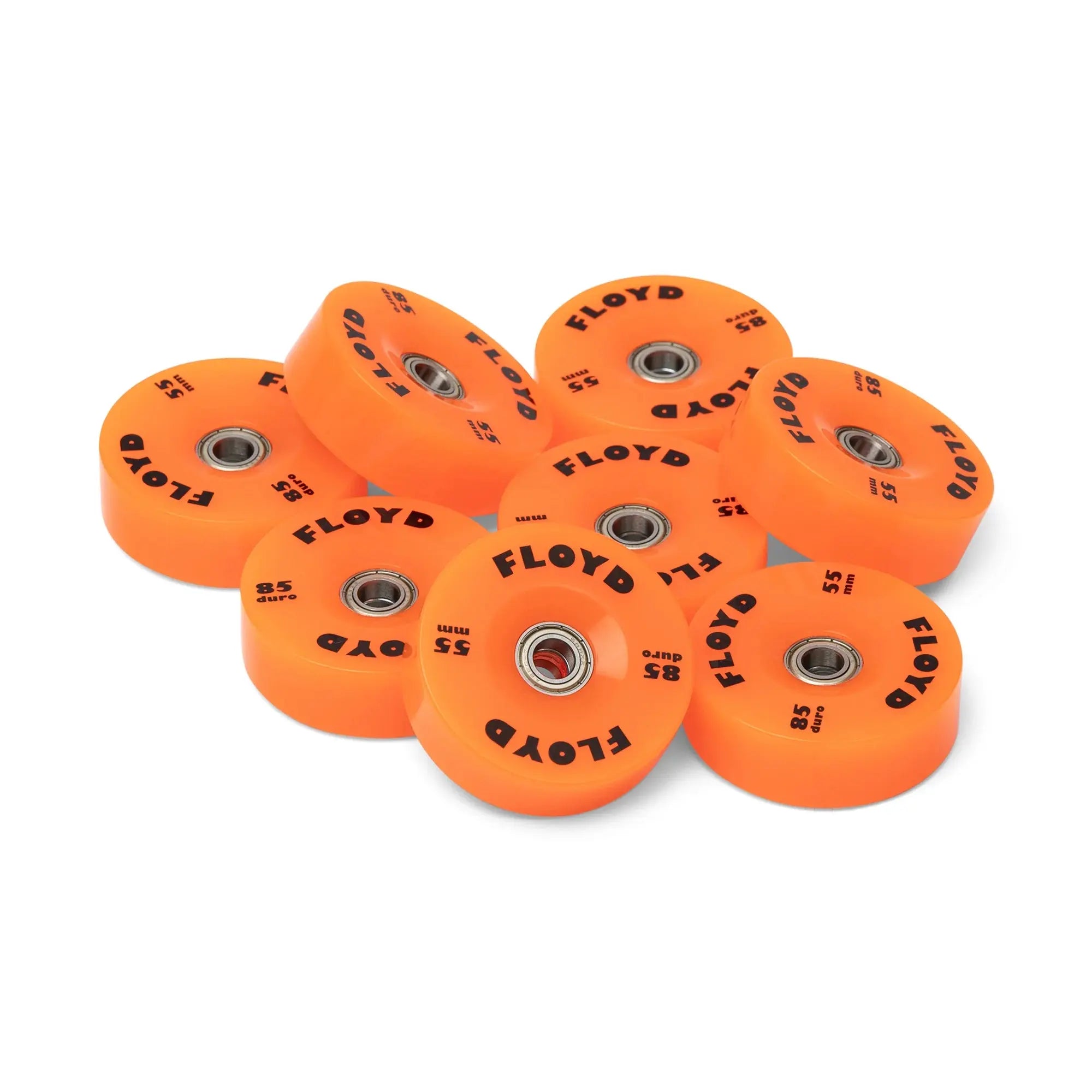
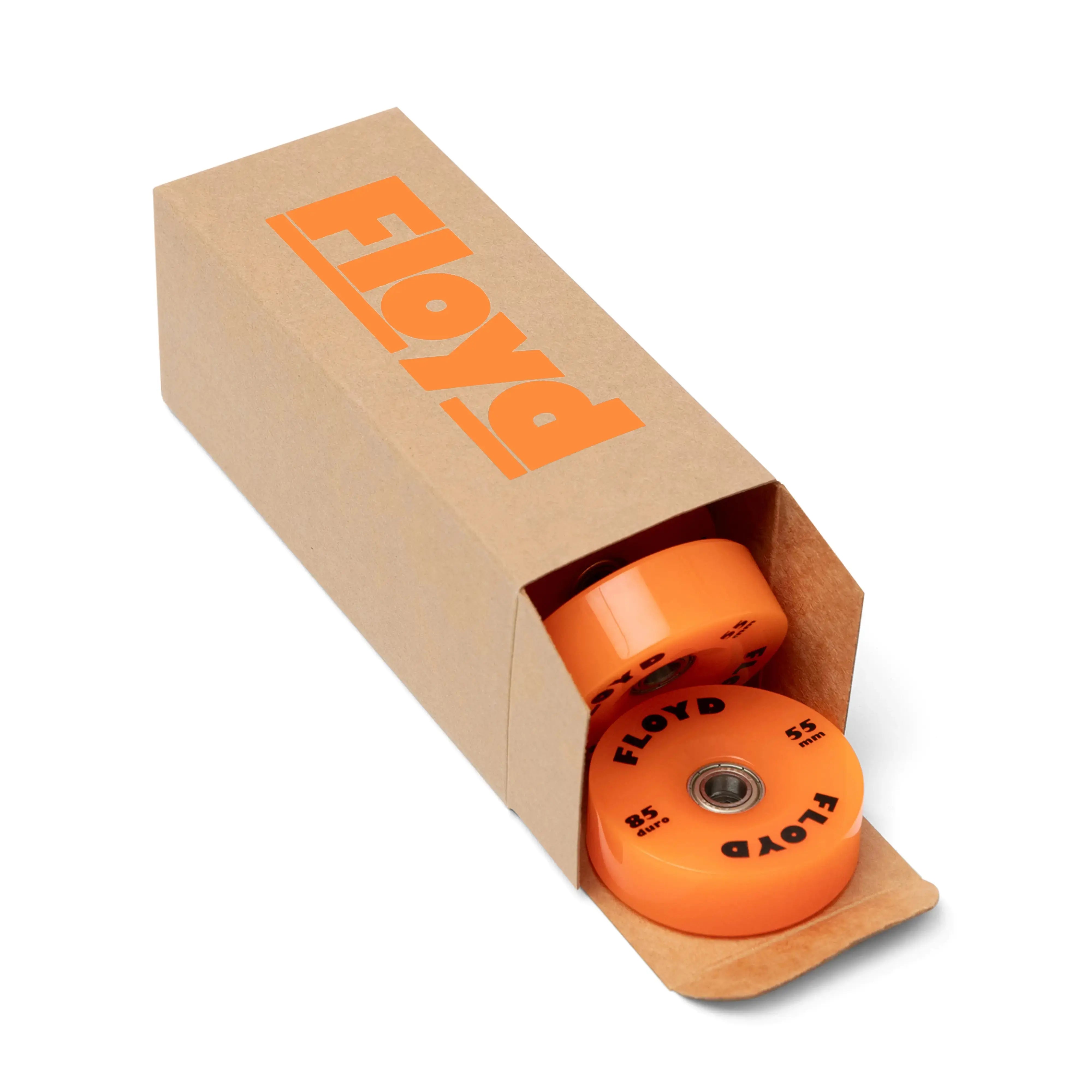
kickin orange
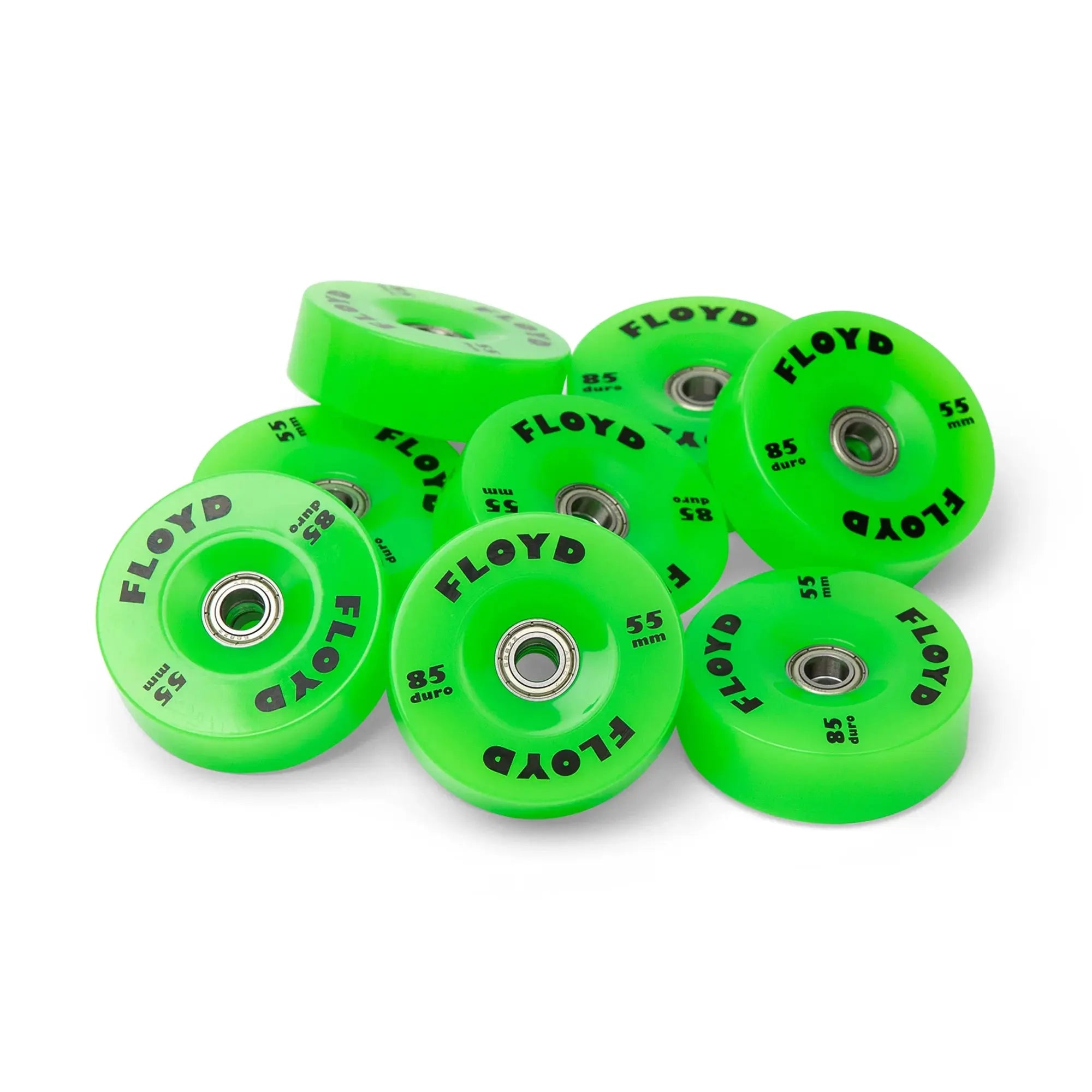
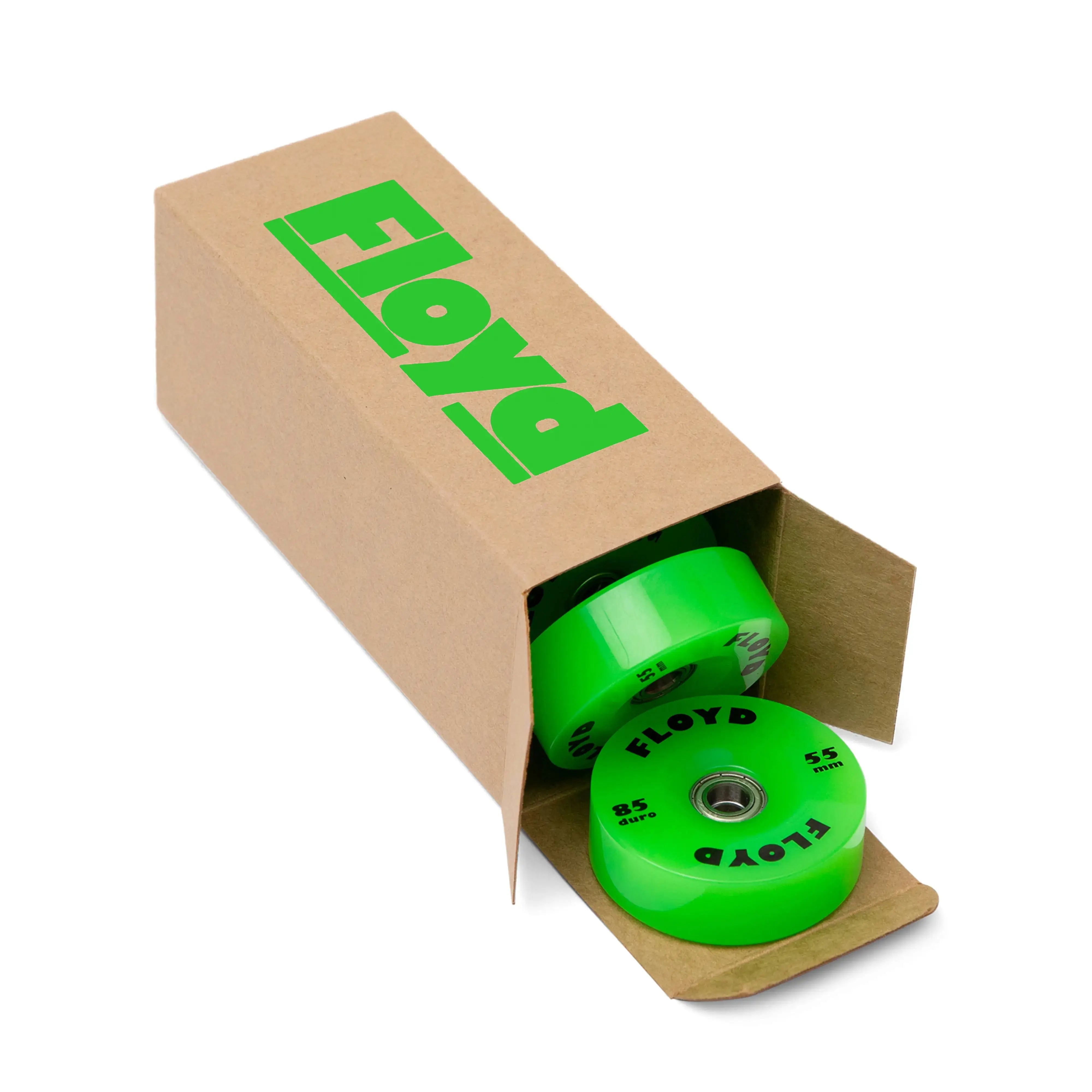
laser green
marshmallow pink